The 360° AI-Driven Hospital Marketing Strategy: How Modern Healthcare Scales Patient Acquisition
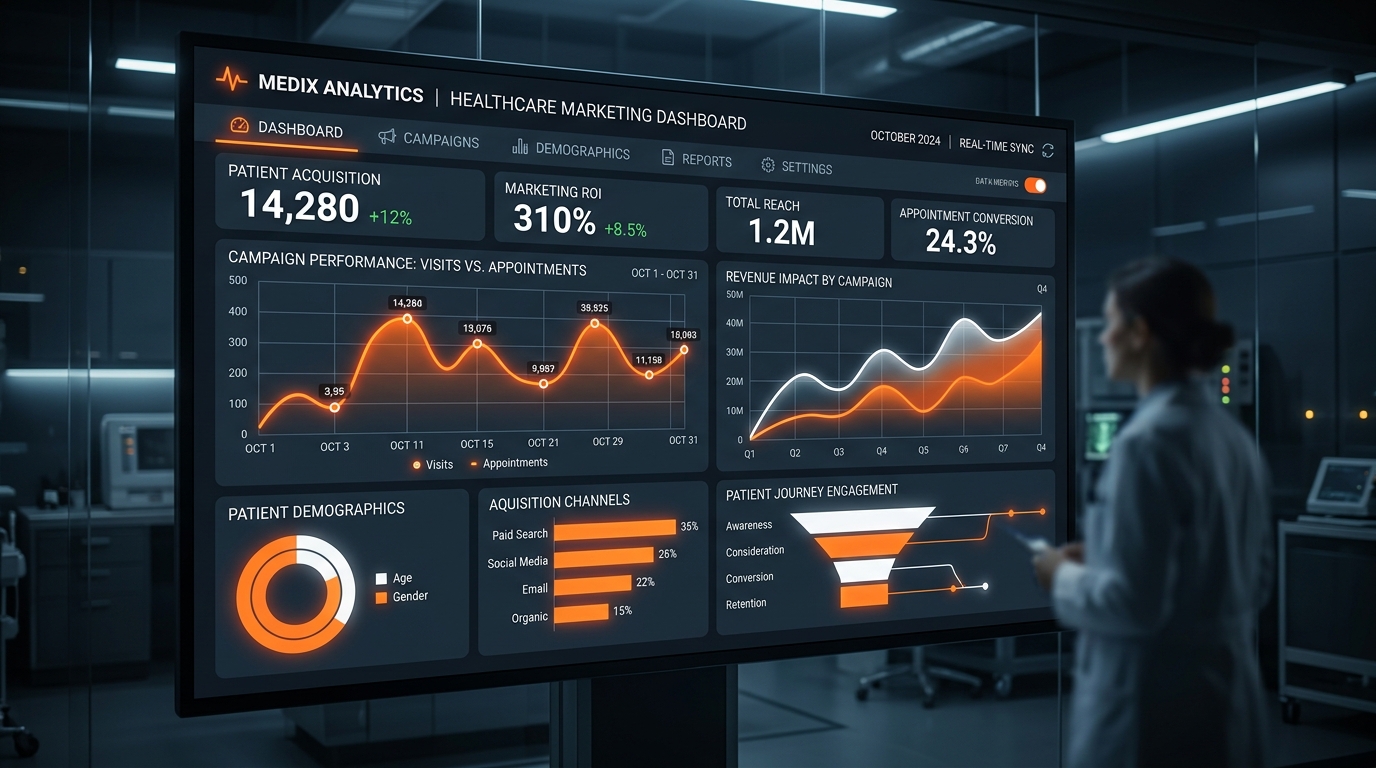
The landscape of healthcare marketing has transformed. Traditional advertising methods—billboards, newspapers, and generic broadcast ads—are failing to deliver measurable ROI. Today’s patient journey begins online, typically with a high-intent search query. To remain competitive, modern hospitals must implement a 360-degree digital marketing framework powered by artificial intelligence.
AI-driven marketing allows hospitals to shift from static campaigns to dynamic, predictive systems. It balances patient data compliance (HIPAA/local data security protocols) with hyper-personalized patient acquisition. (If you are running a regional medical center, learn more in our guide on Bareilly local marketing strategies).
Pillar 1: Intent-Focused AI Search Engine Optimization (SEO)
When a patient searches for medical conditions or specialized procedures, your hospital’s department needs to rank at the top. Traditional SEO focuses on keyword stuffing, but AI SEO leverages semantic entity mapping. By coding custom JSON-LD medical schema markup, we teach search engine bots the exact relationships between your hospital's doctors, departments, treatment options, and locations. Check our high-speed Web Development Services for details on schema injection.
- Structured Medical Schema: Clear structured data indicating physician specialties, medical procedures, and hospital location metadata.
- Semantic Entity Optimization: Building content hubs that answer complex patient symptoms rather than simple search terms.
- Local Map Stacking: Optimizing hospital department profiles to capture "near me" emergency searches.
Pillar 2: Predictive PPC Ads & Bidding Systems
Paid acquisition on platforms like Google Ads is highly competitive for hospitals. A single click for terms like "best cardiologist" or "orthopedic surgery" can be incredibly expensive. AI-driven predictive bidding solves this problem by analyzing auction competition hourly. Our PPC Ad Management automates these shifts, ensuring your ads only target cost-effective keywords during optimal bidding windows.
Pillar 3: 24/7 AI Patient Intake Agents
Once a patient lands on your hospital's website, prompt engagement is critical. Slow response rates on web forms directly cause prospect loss. By deploying context-aware bots built with our AI Agent Services, hospitals can qualify and guide patients instantly.
These agents are trained on internal medical triage parameters (such as department directory guides) and CRM data. They safely engage visitors, answer standard scheduling questions, collect contact details, and book consultation slots directly into the doctor's calendar.
Pillar 4: Behavioral Nurturing and 360° Attribution
A complete marketing lifecycle doesn't stop at lead capture. AI models analyze user interaction signals to trigger personalized email sequences. For example, if a patient views a joint-replacement service page and downloads an informational guide, the system serves segmented email sequences explaining care paths, physician qualifications, and patient testimonials.
Crucially, we integrate server-side tracking (Conversions API) to bridge the gap between ad click clicks and physical clinic check-ins. This gives hospital boards complete visibility over campaign performance and actual cost-per-patient metrics.
"AI-driven hospital marketing isn't about automated diagnosis; it's about engineering a frictionless patient journey. By removing booking hurdles and intent mismatch, hospitals inspired trust before the patient even visits the clinic."
Summary: Step-by-Step Execution Plan
| Phase | AI Component & Strategy |
|---|---|
| 1. Discovery | Sitemap audits, HIPAA-compliant tracking checks, and semantic keyword research. |
| 2. Setup | Deploying high-speed landing pages, JSON-LD medical schema, and AI chatbot prompts. |
| 3. Launch | Activating Google/Meta campaigns with hourly bid scaling scripts active. |
| 4. Optimize | Continuous creative variation testing and CRM attribution audits to reduce acquisition costs. |
Frequently Asked Questions (FAQ)
How does AI improve patient acquisition for hospitals?
AI optimizes hospital patient acquisition by adjusting search ad bids hourly (predictive bidding), structuring physician pages with local schema markups, and qualifying prospective patients 24/7 using AI agents.
Is AI-driven hospital marketing HIPAA and data privacy compliant?
Yes, our custom AI agent integrations and data APIs are configured with strict authentication guardrails, ensuring patient data inputs are safely processed without leaks.
What is the benefit of medical schema markup in healthcare SEO?
Medical schema markup translates physician specialties, treatments, and location details into machine-readable JSON-LD, making it easy for search bots and AI engines to index and rank your hospital.
Get a Free Healthcare Marketing Performance Audit
Our crawlers will scan your hospital's search visibility, compare local department competition, and build a target acquisition plan.
Book Consultation Call